
The No 1 Fear Holding You Back From Speaking Up (And How to Move Past It)
What will they think of me? What if I say the wrong thing? What if they judge me?
If those thoughts have ever stopped you from pressing record, raising your hand, or saying yes to a speaking opportunity - you're not alone. The fear of judgment is the number one thing I hear from ambitious women in business when it comes to using their voice - and it's costing them more than they realise.
In this blog, I'm going to explain exactly what's going on when that fear takes hold, why it's so deeply wired into us, and four practical steps you can start taking today to speak up - even when that inner critic is at full volume
What Is the Fear of Judgment, Really?
At its core, the fear of judgment is a worry about what others will think of us. And it's not just about strangers - it's often the people closest to us, or people we used to know. Former colleagues, old friends, family. The Katie from accounts you worked with a decade ago, who might see your LinkedIn post and have an opinion about it.
I know this intimately, because I let it hold me back from launching this very podcast for almost a full year. It was on my vision board at the start of 2025 and still sitting there unticked at the end of it.
I'm a communication coach, I work with women every day on exactly this and I still had to work through it. That's because this fear isn't a weakness or a mindset flaw - it's deeply ingrained in us.
Why Your Brain Is Wired to Fear Judgment

Thousands of years ago, being part of a tribe wasn't just nice to have - it meant survival. Rejection or exclusion from the group could literally mean death, so our brains evolved to be hyperaware of social threat and acceptance.
That instinct hasn't gone away. It's just showing up differently now - as the voice that tells you not to post the video, not to pitch yourself for the podcast, not to share the opinion you actually have.
In the communication work I do with clients, we look at four distinct communication profiles. One of them - held by a significant proportion of the population - has a core fear of social rejection and loss of popularity. For these people, the thought of being judged isn't just uncomfortable, it can feel genuinely paralysing.
That inner critic, the one whispering, keep quiet, stay safe, don't risk it - it's not trying to sabotage you, it's trying to protect you. But in doing so, it keeps you small, stops you from sharing your expertise, and hands control of your voice over to other people's imagined opinions.
What It Actually Costs You When You Stay Silent

I'm not going to pretend this is just about confidence. Staying quiet has real, tangible professional consequences.
When women don't use their voice - in business, in the workplace, in visibility opportunities - it often means:
Being passed over for promotions or opportunities because your expertise isn't visible
Declining speaking invitations, podcast interviews, or media moments that could genuinely scale your authority
Producing content that's diluted, hedged, or inconsistent because you're writing for an imagined critic rather than your real audience
Businesses that grow slower than they should, because the person behind the brand is invisible
I've seen women say no to opportunities that would have transformed their business - not because they weren't ready, but because the fear of being judged felt bigger than the opportunity itself.
And here's what struck me when I left corporate and started my own business: I didn't post on LinkedIn for four months. Four months! In my old role, I'd been active and confident on the platform because I had a clear identity within it. When I stepped out on my own, that identity shifted and with it, the fear came rushing in.
Whenever you go through a significant life or career change, your confidence will naturally dip as your identity shifts. It happens when you become a parent, change career, start a business, step into leadership. The fear of judgment tends to spike in those transitional moments, precisely because you're not yet sure who you are in this new version of yourself.
The Shift That Changed Everything for Me

The turning point wasn't learning to silence the inner critic. I'm not sure we ever fully do that. It was changing the question I was asking.
From: What will they think of me?
To: How can I help others with what I have to say?
In television production, we had a simple measure: if we helped one person with what we made, we'd done our job. That principle transfers directly to using your voice in business. If one woman hears something you say on a podcast, reads something you write, or watches a video you nearly didn't post - and it shifts something for her - that matters.
What you have to say matters.
Four Steps to Take Despite the Fear of Judgment
These aren't quick fixes. I'll be honest with you - this is a daily practice, not a one-time exercise. But these four steps will help you to move forward when it comes to your speaking goals.
1. Get clear on what truly matters to you
When we're in a period of change or heightened visibility, it's easy to lose the thread of who we actually are. Take time to reconnect with your values, your why, what you stand for, and what you believe about your work. Write it down. Keep it somewhere you can return to when the inner chatter gets loud.
This is essential ground work. Reconnecting with what matters to you creates an anchor and makes speaking authentically far more possible.
2. Deliberately put yourself in situations where judgment feels possible
This sounds counterintuitive, but it works. Avoidance keeps the fear alive. Exposure - done gradually and with intention - shrinks it.
This might look like: committing to a networking event and actually going, agreeing to speak on a peer's podcast, going live on social media on a scheduled day so your audience expects you to show up. The key is attaching a commitment to it. When someone else is expecting you, backing out becomes harder and showing up becomes the path of least resistance.
When I decided to launch this podcast, I announced it publicly before I'd fully talked myself into it. That announcement created accountability, and that accountability resulted in taking action.
3. Put yourself in their shoes - and be honest about who actually matters
We spend an enormous amount of mental energy imagining what others will think. But how often do we question whose opinions we're actually giving weight to?
If the people who truly know and respect you heard you share your expertise, speak on a platform, or post your perspective - what would they actually think? In most cases, they'd be proud of you or even inspired.
There's a quote I love ‘Be who you are and say what you feel, because those who mind don't matter, and those who matter don't mind.’
For too long, we let the people who mind shape our silence. Start focusing your attention on the people who matter.
4. Get support
Trying to coach yourself out of a deeply ingrained fear is hard. Working with someone who can help you identify what's underneath it, challenge the thoughts that keep it in place, and hold you accountable to the actions that move you forward - that's where real change happens.
This is exactly the work I do with my clients. Not just performance polish, but the internal shift that makes confident communication feel sustainable, not effortful.
Every time you choose to speak despite the fear of judgment, you're telling yourself something important: my voice matters, I'm ready, I'm good enough, and what I have to say can make a difference for someone else.
No one speaks perfectly. We stumble, we over-explain, we sometimes say things differently than we intended. That's not failure - that's being human. And more often than not, the mistake you're still replaying in your head three days later? Nobody else even noticed.
The question isn't whether the fear will be there. It will be. The question is whether you're going to move forward, despite it.
Prefer Audio?
You can also listen to this episode on my podcast She Speaks to Scale.
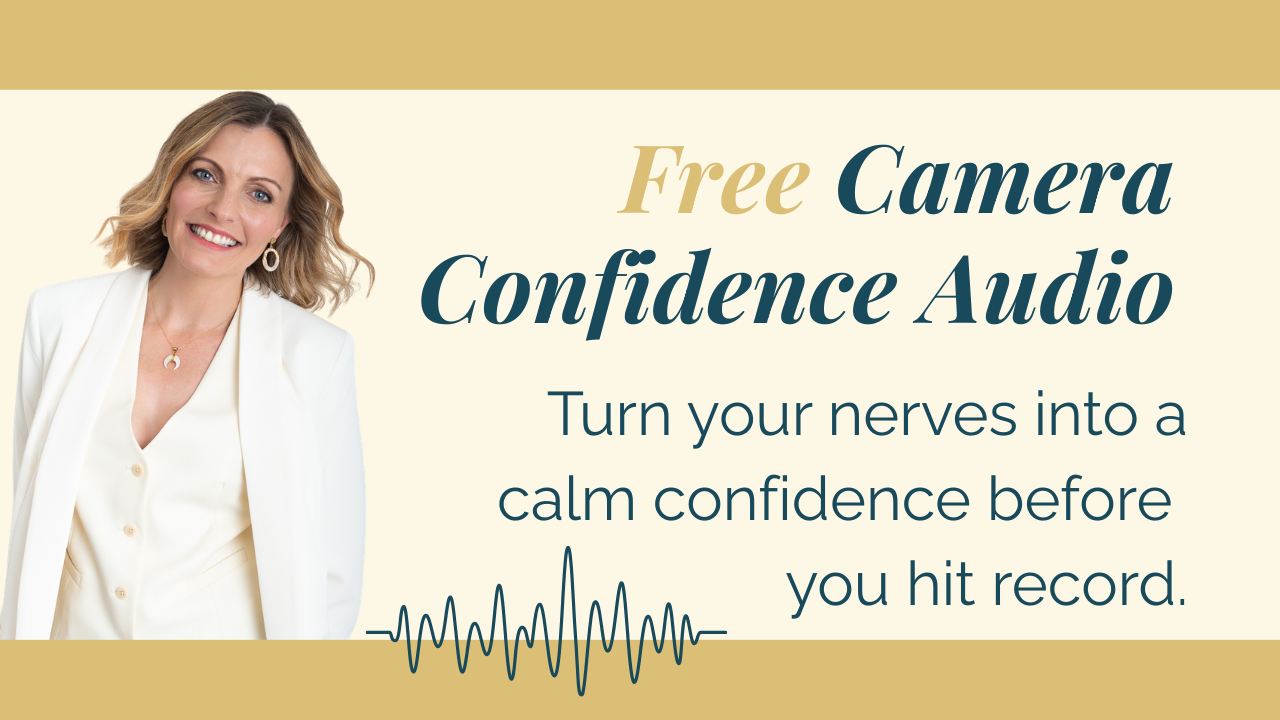
For a confidence boost before appearing on camera: Download my free 5 minute camera confidence audio here
How To Work With Me
I'm Sarah Collins - Media trainer, Communication Coach, and former Senior Television Producer for ITV & ITN. I work with ambitious founders and spokespeople in businesses to help them communicate with clarity, confidence, and composure in the moments that matter most. If you've got a podcast, interview, or speaking opportunity coming up and you want to feel truly ready for it, this is how we can work together:
Founders who want to become an expert voice in their field
Organisations who want their representatives to become credible spokespeople
Credits: Khusen Rustamov, Pixabay, Brett Jordan on Unsplash, Milad Fakurian on Unsplash, Kristina Flour on Unsplash, Towfiqu barbhuiya on Unsplash, Kaja Kadlecova on Unsplash