What to say when you don’t know what to say (And why you know more than you think)
It's one of the most requested topics I get asked about. If you've ever questioned turning down a speaking opportunity because you’ve thought - but what do I actually say? This post is for you.
Not knowing what to say can quietly keep you invisible. It's the reason people turn down podcast invitations they actually want to accept. It's the hesitation behind the media interview that never gets pitched. And it's the voice that whispers: who am I to talk about this? just when an opportunity arrives.
Feeling this way is not a sign that you have nothing worthy to share. It's not a sign that you're not ready. It simply means you haven't yet done the groundwork to make sure you always have something to reach for.
Today I'm sharing the practical strategies I use with my own clients - drawn from over 20 years in television production and my experience as a media trainer and communication coach - so that you are never lost for words again.
The Mistaken Belief That's Keeping You Quiet

There's a belief that runs quietly underneath a lot of speaking anxiety, and it sounds something like this: I need to say something nobody has ever said before. Something original. Something brilliant.
I understand that belief, because I've felt it myself. When I launched my business, even with two decades of experience in television behind me, the doubts crept in. Who am I to talk about this? What am I even going to say?
So I did what I always do - I went back to basics. I read every book I could find on my subject, watched every relevant TED talk, listened to every podcast in my space. And what I realised was that I already knew most of it. I just needed to be reminded of what I knew and organise it into my own words.
The same is true for you.
People are not expecting you to reinvent the wheel. What they are actually looking for is far more specific, and far more achievable. They want:
Your insights: the way you see the world, shaped by everything you've lived through.
Your perspective: formed by your background, your experience, and the journey you've taken to get here.
Your stories: because stories are what people remember.
Your solutions: because they've come to you to solve a problem, and they want to know how you help people overcome it.
You already have all of these - the work is in understanding how to talk about them.
What to Have in Your Back Pocket: 5 Things to Know Before Every Speaking Opportunity

In television, we call them key messages and stories. Know these inside out, and whatever speaking opportunity you find yourself in, you'll always be able to convey what you need to convey.
1. Your mission
Everything you say, from a business perspective, should be able to link back to your overall mission - the why behind what you do, your deeper purpose, the reason you do this work.
Mine is straightforward: to help women in business own their voice, be heard, and create the impact they want in the world. I feel so passionately about this because I didn't have that space when I was younger, and many women of my generation didn't either. That mission is the through-line in everything I say - in podcast interviews, in client sessions, in every piece of content I put out.
When you're stuck on what to say, come back to your mission - everything else flows from there.
2. Why what you do is relevant right now
From years in newsrooms and TV studios, this one is absolutely ingrained in me: always give people a reason to listen to you now.
One of the most practical ways to do this is with awareness dates, and I've used them throughout my career, in practically every role I've had in television. Research the ones relevant to your industry and mark them in your diary. They can become social media content, the inspiration for a podcast episode, or the hook for a campaign around something you're launching. There is an awareness day for almost everything.
Beyond that, ask yourself:
Is someone in the public eye talking about what you do?
Are there new statistics or research in your field?
What conversations are happening in your industry right now?
Any of these can give your message an immediacy that makes people pay attention.
3. Why you
This is the question that keeps so many brilliant founders from stepping into their expert era: why would anyone want to hear from me?
We've all done it - looked at someone else in our field who is doing brilliantly and immediately thought: well, they're already doing that. What do I have to add?
But you are not being compared to everyone else in your field. The reason you've been invited onto that podcast, or shortlisted for that interview, is because of you - your angle, your story, your way of explaining things. Nobody else has lived your life, built your business in the same way, made your particular mistakes, or arrived at your insights via the same path. That is not a small thing. That is your entire competitive advantage.
Start reframing the question. Not why me? But, why not me?
What three things make you genuinely distinct? Your specific background, a client result you've achieved, a perspective shaped by your experience, a specific approach that's entirely yours. Know these, and you'll always have an answer to the question of why you belong in the room.
4. Your personal stories
Never underestimate the power of a personal story - whether it's an anecdote, a lesson learned the hard way, or a moment that changed how you think about your work.
We are drawn to stories of difficulty and challenge not because we enjoy other people's misfortune, but because we want to feel that we are not alone. Sharing what you've overcome, what's happened to you this week, this month, this year - it's one of the most powerful ways to connect with an audience and evoke an emotion. And it's that emotion that drives people to act.
5. Your client wins
Alongside your own stories, always have a handful of client results ready to reach for. They do something your own story can't do alone - they shift the message from here's what I do to here's what happens when we work together. And that's what turns a listener into a potential client.
You Know More Than You Think
This is ongoing work. I still have days where I question what I have to say and that is completely normal. We too often dismiss our experience and insights as things that everybody already knows. They don't.
They are looking to you as the expert in your field. You have knowledge they want or need, experience they respect, and insight that can genuinely help them. The work isn't in finding something new to say. It's in organising what you already know and learning how to share it well.
The next time you think you have nothing to say, remember: you are not starting from nothing.
You simply need someone to remind you where to look.
Prefer Audio?
You can also listen to this episode on my podcast: She Speaks to Scale.
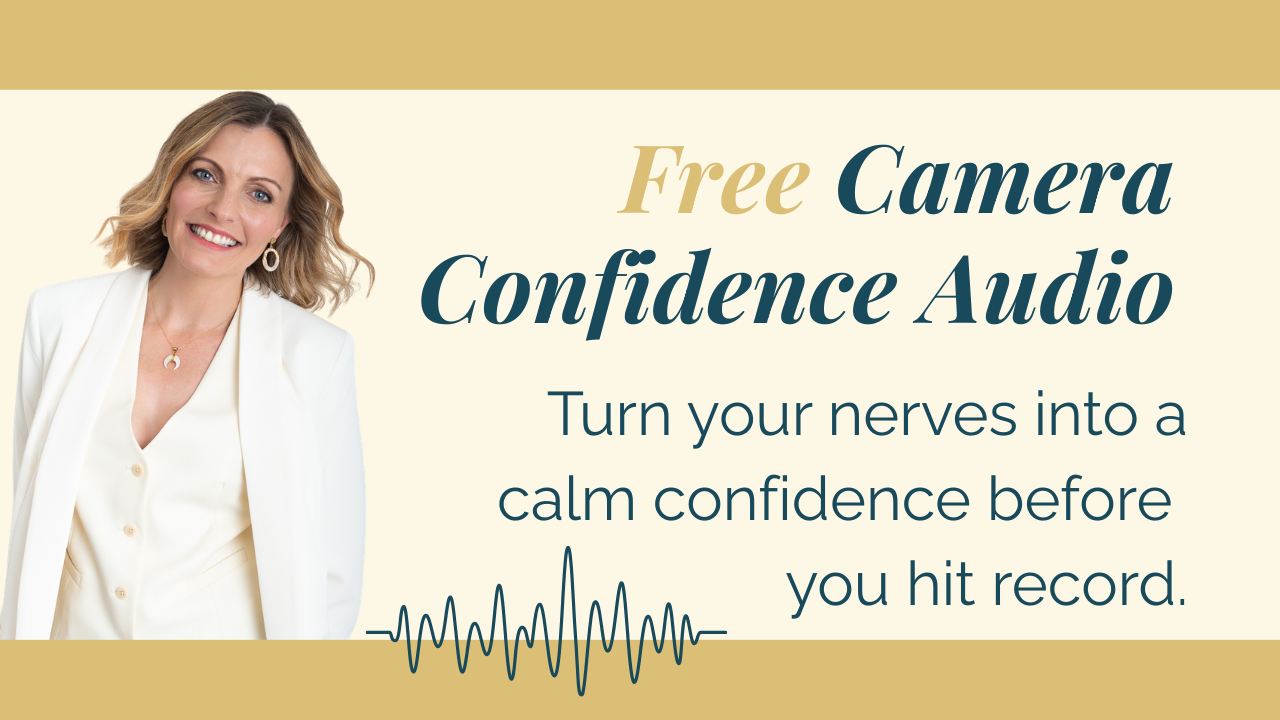
Need a confidence boost before appearing on camera:
Download my free 5 minute camera confidence audio here
Want support with this?
I'm Sarah Collins - Media trainer, Communication Coach, and former Senior Television Producer for ITV & ITN. I work with ambitious founders and spokespeople in businesses to help them communicate with clarity, confidence, and composure in the moments that matter most. If you've got a podcast, interview, or speaking opportunity coming up and you want to feel truly ready for it, this is how we can work together:
Founders who want to become an expert voice in their field
Organisations who want their representatives to become credible spokespeople
Photos by: Photo byKanhaiya Sharma onUnsplash, vitaly-gariev-m76kVfIRS5U-unsplash, Photo by Flipsnack on Unsplash, Photo by Brett Jordan on Unsplash